Skip the Crowded Coast: Phuket's Inland Neighborhoods Are Where Smart Long-Term Renters Are Landing
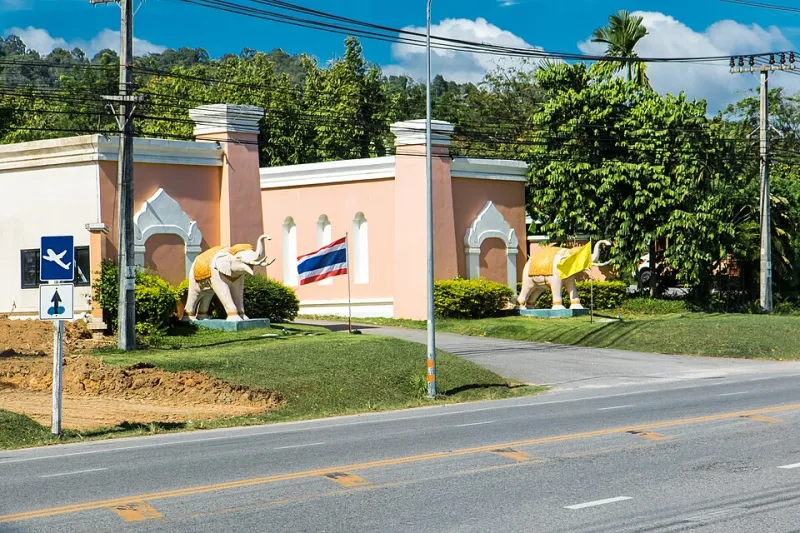
Photo: Максим Улитин, CC BY 3.0, via Wikimedia Commons
Ask most Americans planning a move to Phuket where they want to live, and the answer is almost always the same: somewhere near the beach. Patong, Kata, Karon, Bang Tao — the coastal hotspots get all the attention, all the Instagram posts, and, not coincidentally, all the highest rents.
But spend a few months actually living on this island — not just vacationing here — and a different picture starts to emerge. The renters who've been here the longest, the ones who've figured out how to build a genuinely comfortable life in Phuket rather than just an extended holiday, tend to cluster somewhere unexpected: inland.
Neighborhoods like Chalong, Kathu, and Phuket Town proper have been quietly building a reputation among long-term expats and remote workers as the island's best-kept secret. And if you're serious about renting here for more than a few months, it's worth understanding why.
What "Inland" Actually Means in Phuket
First, a quick geography note for anyone who hasn't spent time on the island. Phuket isn't that big — it's roughly 30 miles long and about 13 miles at its widest. That means "inland" is a relative term. When we talk about neighborhoods like Chalong, Kathu, or the area around Phuket Town, we're not talking about some remote jungle outpost. We're talking about communities that sit 10–20 minutes from multiple beaches by scooter or car.
The distinction isn't really about distance from the ocean. It's about distance from the tourist infrastructure — the beachside bars, the sunbed vendors, the overpriced cocktails, the constant stream of package-tour groups. Inland neighborhoods exist in a slightly different Phuket: quieter, more local, more functional.
Chalong: The Expat Village That Doesn't Feel Like One
Chalong sits in the southern part of the island, anchored by its famous Buddhist temple — Wat Chalong — and a roundabout that serves as a kind of unofficial hub for the area. It's home to a surprisingly diverse mix of people: Thai families, European retirees, fitness-focused expats who train at the area's many Muay Thai and MMA gyms, and a growing number of remote workers who appreciate the neighborhood's no-nonsense vibe.
What makes Chalong work for long-term renters? A few things:
Price. Rental rates in Chalong run noticeably lower than comparable properties in beachfront areas. A modern one-bedroom with pool access that might cost $1,200–$1,400/month in Kata or Karon can often be found for $800–$1,000 in Chalong. Over the course of a year, that gap adds up fast.
Practicality. The neighborhood is loaded with the kind of everyday infrastructure that actually makes life work — hardware stores, mechanics, local markets, pharmacies, and a solid selection of restaurants that cater to both Thai and international tastes without tourist-trap pricing.
Community. Chalong has one of the island's more established long-term expat networks. There are regular social events, running clubs, and enough coffee shops with fast WiFi to keep any remote worker productive.
The nearest beach — Rawai — is about a 10-minute drive south. Patong is roughly 20–25 minutes north. It's genuinely central in a way that beachfront neighborhoods rarely are.
Kathu: Phuket's Quiet Middle
Kathu doesn't get a lot of press. It's not particularly photogenic — there's no dramatic coastline, no iconic temple, no famous night market. What it has instead is a calm, residential quality that a lot of long-term renters find deeply appealing once they get past the initial lack of glamour.
Located roughly in the center of the island, Kathu sits between Patong and Phuket Town and is home to a large local Thai population, several golf courses, and a network of roads that make it genuinely easy to get almost anywhere on the island in under 30 minutes.
Rentals here skew toward houses and townhomes rather than high-rise condos, which suits people who want a bit more space and a bit less of the resort-complex atmosphere. A three-bedroom house with a garden in Kathu can rent for what a one-bedroom condo costs in Patong — that's the kind of value proposition that tends to resonate once you're thinking in terms of months rather than weeks.
For digital nomads specifically, Kathu has another underrated advantage: it's close to Phuket's Central Festival mall, one of the island's largest shopping centers, which means reliable access to tech supplies, international grocery options, and yes, multiple decent-speed coffee shop alternatives when you need a change of scenery from your home office.
Phuket Town: Culture, Character, and Seriously Good Food
Phuket Town — the island's actual urban center — deserves its own spotlight. It's the most authentically Thai part of Phuket, and for renters who want to actually experience the culture rather than just observe it from a beach bar, it's hard to beat.
The Old Town area, with its Sino-Portuguese architecture, street art, and legendary Sunday Walking Street market, has a character that no beach neighborhood can replicate. Rents here are competitive, the food scene is exceptional (some of the best Thai food on the island is found in Phuket Town's local restaurants and markets), and the sense of community is real.
The tradeoff, if you can call it that, is that you're about 20–30 minutes from the west coast beaches. For renters who aren't planning to spend every day on the sand — which, after the first few months, is most of them — that's a non-issue.
The Convenience Equation
Here's the thing that surprises most people when they actually map it out: living inland in Phuket often means better access to the island as a whole, not worse. Beachfront neighborhoods like Patong or Kamala are tucked against the coast, which means getting from one end of the island to the other requires navigating around them. Inland areas, by contrast, tend to sit on or near the main arterial roads, making it genuinely easier to reach multiple beaches, the airport, and the island's commercial centers.
For digital nomads especially, this matters. You're not commuting to a beach every day — you're commuting to a coffee shop, a co-working space, a grocery store, a gym. Inland neighborhoods are often better positioned for all of those.
What the Long-Timers Know
Talk to anyone who's been living in Phuket for two or more years and ask them where they live. A striking number of them will name an inland neighborhood — and when you ask why, the answers are consistent: it's quieter, it's cheaper, it feels more like a real place and less like a resort, and once you have a scooter, the beach is never more than 20 minutes away anyway.
The coastal neighborhoods aren't going anywhere, and for short-term stays or people who genuinely want to wake up and walk to the sand, they make total sense. But for anyone planning to put down roots — even temporarily — Phuket's inland communities offer something the beachfront can't quite match: the feeling of actually living here, rather than just visiting.
If you're ready to explore what that looks like in practice, start browsing listings in Chalong, Kathu, and Phuket Town. You might be surprised what you find.